Please visit my website instead now -
www.drmattbishop.com
Thursday, 19 April 2012

Friday, 30 March 2012
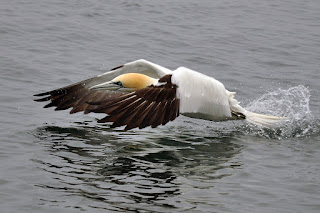
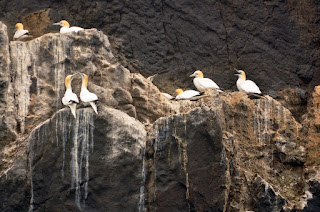
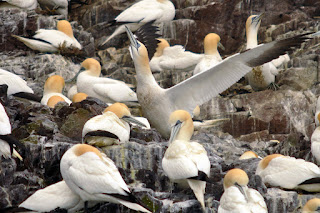
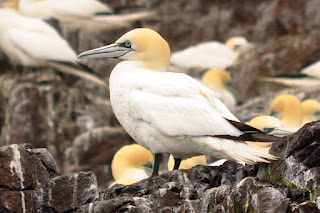
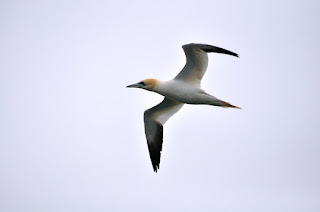
Northern Gannet (Morus bassanus)
These photos were taken on a boat trip organised by the Scottish Seabird Centre, North Berwick (www.seabird.org) to see Bass Rock close up - one of the main Gannet breeding colonies in the UK, and the origin for the Latin name. These birds are highly efficient flyers and divers and are a truly spectacular sight when you get a chance to see them in close proximity. Their bullet like body, huge wing-span of neary 6ft, and colouration give them a unique place amongst our UK seabirds, and watching them dive at 90mph for fish is just fantastic.





Friday, 25 November 2011
Bar-Tailed Godwit (Limosa lapponica)

I'm still not 100% sure that I've identified this one correctly but I think so... These two birds were sharing the spoils of the shore-front with some friendly Oystercatchers. Their very long straightish bill and long legs seem to distinuish them from other waders of similar colouring such as the Sandpipers.
Rock Pipit (Anthus petrosus)

These small birds dart about from rock to rock looking for insects to eat. They look almost too slight for their exposed life by the sea compared with their more rugged bird friends. It is tricky to catch them still long enough to see them as one usually only sees a glimpse of brown wings.
Turnstone (Arenaria interpres)

These Turnstones were having a morning rest by the shore - not their usual habit of running around over-turning the seaweed and stones looking for food. Their stout beak is a great tool for the working life of these birds. Not to be confused with Dunlins that have a darker undercarriage and legs.
Purple Sandpiper (Calidris maritima)

These birds were happy mingling with a flock of Turnstones while they were all having a morning rest by the waterfront. With orange-yellow legs and beak it is like a smaller and less showy version of a Redshank. The plumage has a lovely grey/blue and mottled colour - not quite as purple as the name suggests however.
Redshank (Tringa totanus)

It is the orange legs and bill that give the game away for those of us not experts in bird identification. And what lovely shanks, legs they are - much longer than many of the other smaller waders and what a lovely colour.
Curlew (Numenius arquata)


A giant of a wading bird - you don't realise just how big until other birds are near. The down-turned long bill and hauting call make this a most recognisable bird amongst the waders that are digging for their food in the mud flats.
Sunday, 18 September 2011
Common Gull (Larus canus)

What it is to be called 'common'? This lovely delicate gull has finer features that the bigger gulls with yellow legs and beak (without the red spot). A delight to see and hear. Maybe someone can think of a nicer, less common, name for this delightful gull?
Oystercatcher (Haematopus ostralegus)


The Oystercatcher has to be one of the most widely recognisable birds at the beach; the distinctive call, bold colours, and bright red beak all help. Without a long lens it was difficult to get close to these birds as even when they sit and rest on one leg they 'know' you are coming from a long way off.
Ringed Plover (Charadrius hiaticula)


This beautiful Plover runs and darts around the seashore always aware of predators. This bird had a couple of young chicks that were so well camouflaged it was very difficult to spot them. Once I had found them the adults did their best to attract my attention away from the chicks. At one point both adults were performing what appeared to be death-throws - an attempt at saying look at me I'm injured and therefore easy prey. What ingenuity.
Friday, 29 July 2011
Lesser Black-Backed Gull (Larus fuscus)


The yellow legs identify this species from its bigger brother the Greater Black-Backed Gull, and also the Herring Gull. A graceful and powerful glider when patrolling and searching the seashore for food. Like many of the gulls a wonderful site to see the aerobatic display.
Thursday, 21 April 2011
Herring Gull (Larus argentatus)

The 'song' of the Herring Gull is surely the sound of the seaside wherever you are in town or country, although you'll probably see more following the local tractors preparing the soil for the next crop. Don't get cross with them stealing your ice-cream just marvel at their tenacity and bravado, and their magnificent aerobatic skills.
Kittiwake (Rissa tridactyla)

A very pretty but rather noisy gull especially when welcoming the partner back to the nest. At least they do make nests unlike some gulls, albeit rather messy ones full of detritus from the shoreline or harbour. This one is from the colony that nests in the old castle wall at Dunbar harbour, East Lothian.
Thursday, 27 January 2011
Siskin (Carduelis spinus)


Seeing as though this is a very common bird and especially in Scotland I'm wondering why this is the first one I have ever seen. It must have known how happy I was to have seen something new in my garden as he and his female companion were not in the least spooked when I approached with the camera. Shame the Bramblings aren't as obliging. What a great coloured little finch, easily distinguished from the Greenfinch, please come back again and enjoy the peanuts.
Monday, 20 December 2010
Great Cormorant (Phalacrocorax carbo)

The Great Cormorant is usually only seen from afar diving and resurfacing after fishing for a meal. To see them up close you can see how they are so expertly and powerfully built for this purpose with the amazing layering of each broad feather. Then they stand majestic wings wide open to warm in the sun - emperors of the sea.
Grey Heron (Ardea cinerea)

The Grey Heron has to be one of the most primeval of birds. Whether they are stalking prey in the mud-flats or river bank, up in a tree, launching into flight, or soaring overhead with arching wings the view can be breath-taking. To get close you'll have to be hidden and quiet as they know you are coming.
Monday, 27 September 2010
Blue Tit (Cyanistes caeruleus)

The Blue Tit likes to come and feed from anythng that's hanging around just so that it can show off the lovely blue and yellow plumage - leaving the sparrows to fight over the fallen seeds and nuts on the floor. They're not afraid of us humans and will feed happily knowing we are there.
Tuesday, 15 June 2010
Jackdaw (Corvus monedula)

Jackdaws like to play in the garden with the other birds but as they are many times bigger the others just get scared off. These are fantatic looking birds with their shiny grey caps and inquisitive eye. Catch them having fun tumbling throgh the air.
Wednesday, 12 May 2010
House Sparrow (Passer domesticus)

House Sparrows are the playful children of the garden, running around in packs, chatting to each other, tumbling around in flight, and squabling over the food. They are great advocates of bird family life and make the garden a visual and audible riot of movement and sound.
Subscribe to:
Posts (Atom)
